


Attendance per staff hour.
APSH dictated my professional life during the first six years of my management career. It drove staff scheduling decisions. It represented half of my bonus. And if we missed it, I got a phone call from senior management.
Most frontline operations rely on some version of this metric to drive their labor models. Retailers forecast based on sales targets. Restaurants focus on transactions. Movie theaters rely on attendance. The formula might shift a bit by industry, but the logic remains the same: hours are allotted based on revenue opportunity to strictly control costs.
Frontline businesses have worked this way for years. But today, this approach to labor management is failing to meet the moment. In many workplaces, revenue-based staffing is undermining both the customer (CX) and employee (EX) experiences.
And operations are starting to buckle under the pressure.
The problem with revenue-based staffing.
Labor is usually the largest controllable expense in frontline operations. Therefore, management needs a predictable way to allocate resources across locations with fluctuating demand. Revenue-based metrics offer a simple, scalable mechanism for managing costs and maintaining consistency.
However, this mindset is based on a version of frontline work that no longer exists.
Over the past few years, organizations have fundamentally reshaped how work gets done. Omnichannel operations along with increased automation and self-service blurred the lines between physical and digital workflows. Pandemic-enduced disruptions forced organizations to operate with fewer people, creating a new baseline of “acceptable understaffing.” Ongoing pressure to “do more with less” has pushed many organizations to optimize labor for efficiency rather than effectiveness.
The result is a growing mismatch between how staffing is planned and how work actually happens on the ground.
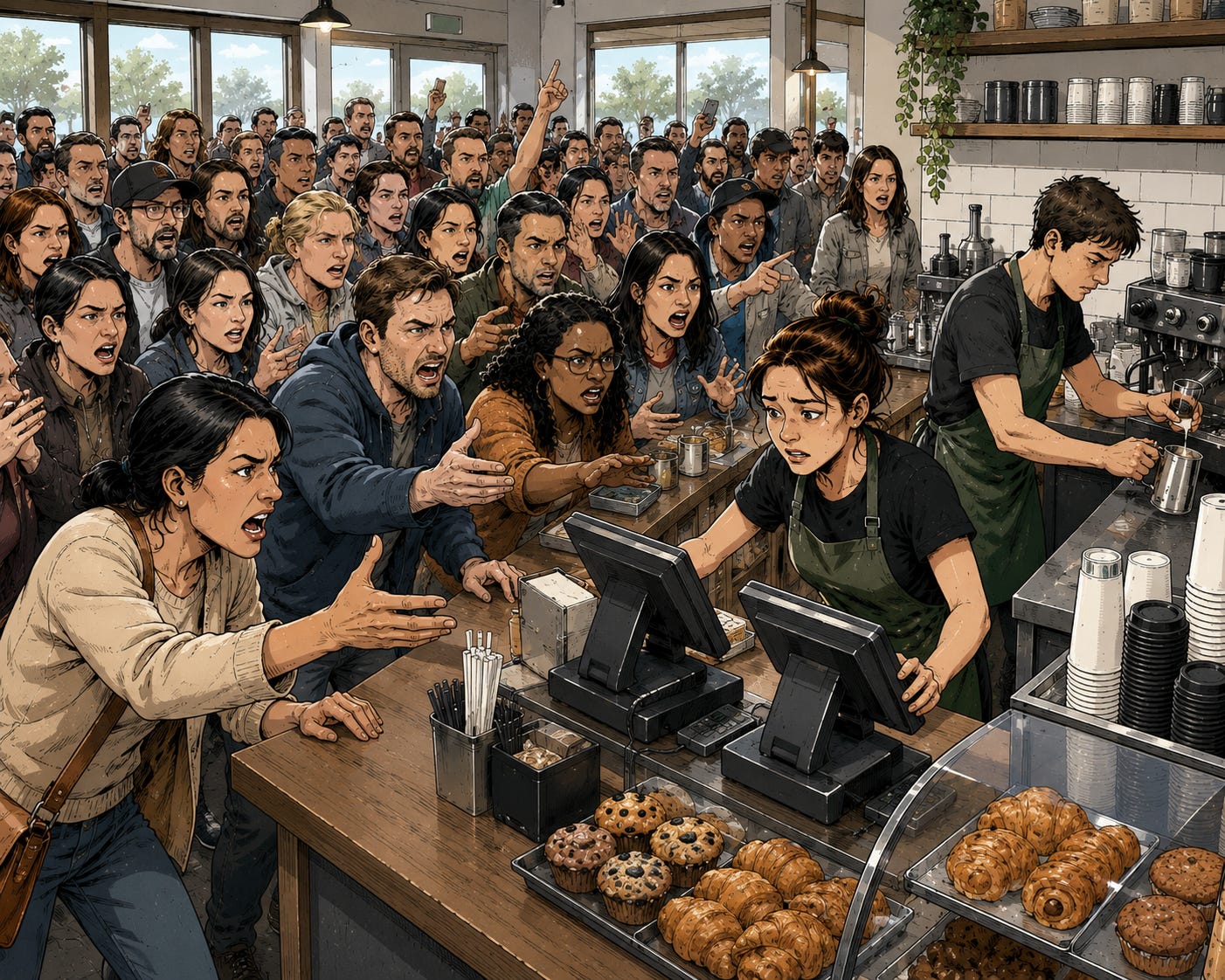
Customers may have tolerated skeleton crews in 2020/2021, but their patience has worn thin. Long lines, inconsistent service, and repeated system breakdowns are pushing customers to reconsider where they spend their time and money. Expectations have largely returned to pre-pandemic levels. Meanwhile, operating models remain stuck in crisis mode.
Frontline employees feel this tension first, long before it hits the bottom line. They’re expected to deliver exceptional experiences while navigating shorthanded shifts, expanded responsibilities, rising prices, and systems that fail to reflect the true complexity of their work. Frustrated customers are the visible symptom, but the underlying issue is structural: staffing models that underestimate workload and over-optimize for cost.
When labor allocation fails to account for how work has evolved, both EX and CX suffer. Teams operate in constant catch-up mode, development and coaching vanish from the to-do list, and organizations lose the very consistency and performance they were trying to protect.
The cracks are showing.
Understaffed teams struggle to execute the basics. Shelf availability slips. Lines grow. Cleanliness declines. Safety falls off. Service becomes transactional rather than transformational. Customers notice, but employees feel it. Burnout increases. Turnover follows. Managers struggle to fill staffing gaps. Executives respond by tightening controls even more, reinforcing efficiency targets rather than digging into the root of the problem.
And the cycle continues …
Some organizations are starting to acknowledge the consequences of running too lean for too long. Target and Starbucks both included new staffing models as part of their turnaround plans. Redirecting investment toward frontline operations reflects a recognition that capacity, not just efficiency, drives customer loyalty and financial performance. An increasing number of companies are also boosting labor investment to free managers from coverage duties so they can focus on leading teams, developing employees, and running the business effectively.
Still, many organizations act only after performance indicators deteriorate, whether through customer dissatisfaction, revenue pressure, or operational instability driven by turnover. Forward-looking organizations have an opportunity to move beyond reactive fixes and proactively redesign how labor supports both execution and experience.
Shifting to a modern labor model.
You don’t need to abandon financial discipline to fix this problem. Meaningful CX and EX improvements don’t require a blank check. Rather, organizations must rethink how they define workload and shift labor decisions to reflect the modern realities of frontline work.
Today’s deskless roles extend far beyond basic customer service and operational tasks. Employees are no longer just stocking shelves or ringing up purchases. They manage local fulfillment operations, handle multi-channel returns, engage with online customers, navigate high-pressure and safety-critical situations, and maintain standards while bringing your brand promise to life. These roles drive short-term performance while building long-term value. Labor models must reflect this reality.
A modern staffing approach balances corporate oversight with local context. Rather than relying on stock formulas and narrow ratios, organizations must incorporate multiple inputs into labor planning. This includes:
Workload complexity alongside transaction volume
Channel mix across physical and digital environments
Customer experience indicators such as wait times, service recovery needs, and execution quality
Employee capability levels, onboarding demands, and development needs
Local operating realities and frontline management insight
This approach shifts staffing from a rigid, unforgiving target to a data-informed set of guardrails. Corporate defines the strategy, expectations, and accountability. Location and shift management applies their judgment based on real-time conditions while maintaining business goals as their north star.
Modern labor models must also acknowledge the importance of staff development as part of the operational workload. Hours must be budgeted for building capability, not just executing tasks. Time allocated for training, upskilling, and coaching strengthens internal talent pipelines, improves retention, and reduces long-term staffing risks.
Challenging the convention.
I never pushed back on APSH. I didn’t question how our target often conflicted with other critical measures like concession sales or guest satisfaction. It was simply the way we ran the business. Thankfully, my targets weren’t as tight as those facing today’s frontline managers. A single call-out could throw an entire shift off balance, but there was usually enough flexibility to figure it out.
Labor models shape more than the weekly schedule. They influence culture and signal what an organization truly values. They tell employees and customers where priorities sit. Too often, they communicate that cost control outweighs the human experience.
When labor is viewed solely as a cost to minimize, organizations limit their own potential. When labor is treated as a strategic asset, staffing becomes a lever that can elevate the customer experience, boost employee capability, and drive sustainable growth.
Revenue-based staffing models were built for a more predictable era. Today’s workplace demands context, agility, and a broader understanding of how complex work gets done. While frontline employees and customers may not sit in the boardroom, their voices shape business outcomes. They make their opinions known through everyday performance and spending decisions. The organizations that win in this next phase will be those that listen early, rethink convention, and design labor models that support people as much as performance.
These organizations will effectively balance short-term operational targets with long-term growth by acknowledging that every decision made via spreadsheet ultimately shapes what happens on the floor, at the counter, and in every customer interaction.
Thank you for everything you do. Let me know how I can help. Be well. JD